
Why You Might Be Waking Between 1am & 3am: A Traditional Chinese Medicine View of Menopause
Are you a lady that is going through the menopause who is sick of the Western medicine approach, or rather the dismissal of the menopause? If so, this one is for you. Let us take a holistic look at the menopause from a Traditional Chinese Medicine standpoint.
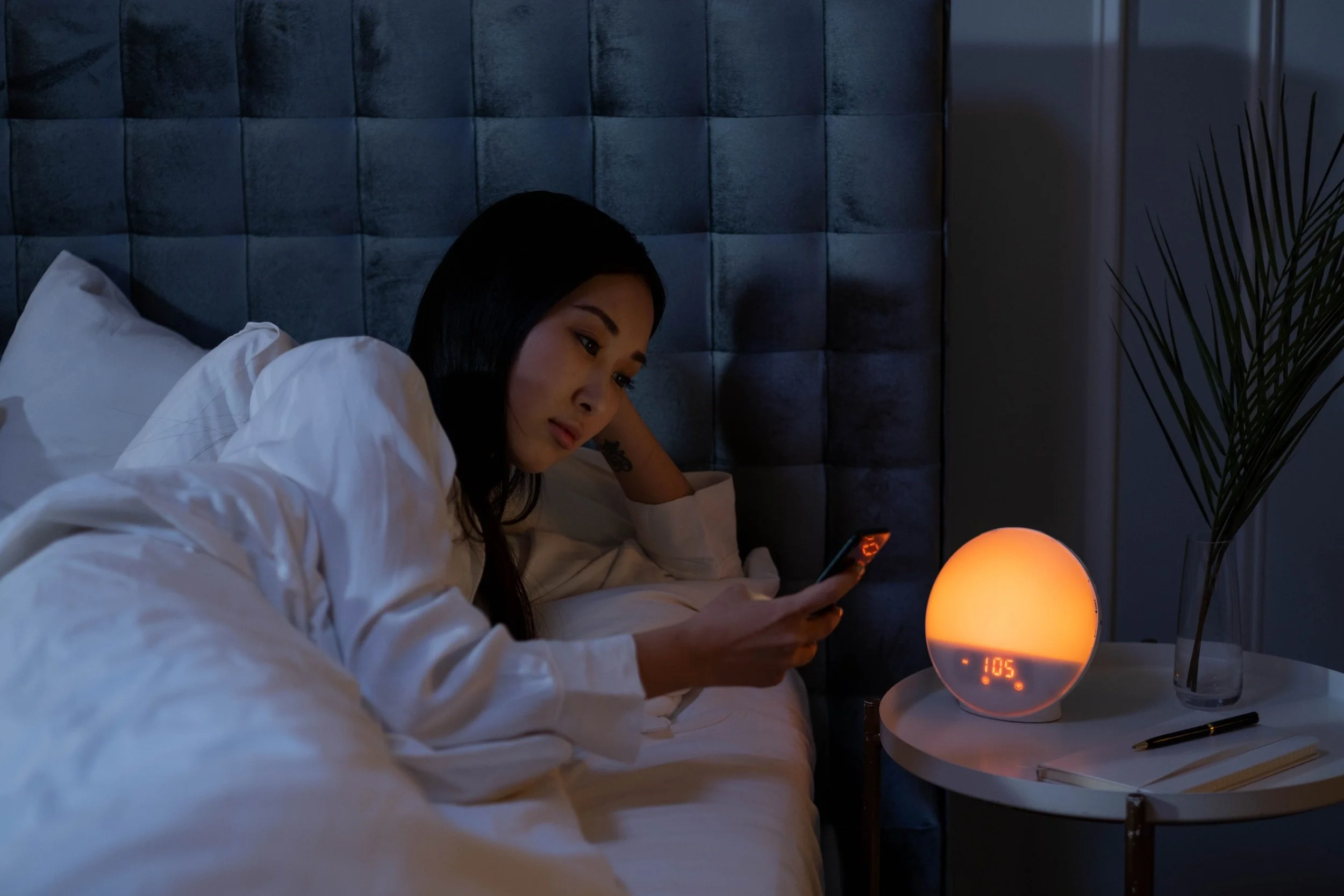
As a Qigong practitioner, it is not uncommon for me to have menopausal or perimenopausal women in my classes. What I have found out through speaking to these ladies is that one of the most common symptoms they experience is waking during the night and not being able to get back to sleep.
When I have probed a little bit deeper as to when they are waking up, a lot of them have reported back that it is between the hours of 1:00 am and 3:00 am. In Traditional Chinese Medicine, it is believed that within the 24 hour clock, there are two hours allocated to each major organ where it is at its peak energy.
The organ associated between the hours of 1:00 am and 3:00 am is the liver. Interestingly enough, the liver is seen to govern the female reproductive system because the liver governs our blood. It filters, purifies, and detoxifies our blood, especially during the night while we are in our rested states.
To support this from a Western medicine point of view, our core body temperature has to drop gradually for us to reach deep levels of sleep, before slowly beginning to rise again. This rise of temperature wakes all of us every night, but we often do not notice it. However, if there is an imbalance in the body, this natural shift in body temperature can cause you to wake up completely.
It is common for those going through the change that this middle of the night waking is joined with a sudden hot flush. Because the liver filters the blood and has a major influence on our core body temperature, an imbalance in the liver could quite likely be the cause of waking between 1:00 am and 3:00 am accompanied by a hot flush.
What do I mean by imbalance? Well, this can be physically, mentally, emotionally, or energetically. For example, during the menopause, there is often a sudden drop in oestrogen, which is what creates the defence mechanism of the liver. Could this sudden drop create a liver imbalance? As our hormones change, surely our liver function changes, causing a knock on impact for the rest of our operating system.
One of the beauties of Traditional Chinese Medicine is that they do not just look at the physical organ. They look at things from an emotional standpoint. In Chinese medicine, it is believed that if we do not express ourselves, we suppress the emotion within, and that emotion then impacts the associated organ.
The liver is associated with anger, jealousy, and frustration, which is why women can feel very frustrated during the menopausal time (and during PMS). It is safe to say that anger and jealousy are not emotions anyone is encouraged to feel or acknowledge. Could all those years, and even generations, of suppressed anger be coming to a boiling point during the change? The opposing qualities of the liver are generosity and kindness. Ask yourself, how kind and generous are you… TO YOURSELF!
The liver is also associated with the season of spring and the element of wood, both of which resemble growth, renewal, and rebirth. Whilst the menopause may be an extremely frustrating time, it is important to remember that it is the start of a new chapter where ladies can put themselves first, let go of old responsibility, and step into their wisdom.
It is also said that the menopause is actually the body's way of preserving our "Qi" (energy) and "Jing" essence within our kidneys. The negative qualities of the kidneys are nervousness, fear, and paranoia, which explains why a lot of women experience higher levels of worry and anxiety as they go through the change. The positive qualities are gentleness and stillness, again provoking the question of how gentle and still are we day to day?
As modern day women managing careers, families, and households, we are normally going at 110 miles an hour. This change in our body is an invitation to slow down, review, and reflect. Sometimes we just need to sit and have a chat with ourselves to review how we process emotions and how we live our life. Embodying more gentleness and stillness every day is so important to all. Whether you are approaching the change or in the depths of it, we can all benefit from slowing down.
My Top Holistic Tips for the Menopause:
Practise Qigong or mindful movement: Doing a regular energy practice helps move physical energy within the body while addressing your mind and soul. Giving yourself that time to switch off and reconnect to self works wonders. I offer online Qigong classes, as well as in person classes across the West Midlands. Click here to learn more.
Use breathing techniques: Breathing exercises are incredibly beneficial for regulating hot flushes and mood changes. It gets you out of your head and back into your body, giving you those much needed minutes of stillness. Try breathing in for 4, holding for 7, breathing out for 8.
Build holistic awareness: Start to become super aware of your mood, your energy levels, your tastes, and the specific times in which your symptoms change. Once you notice these patterns, you can begin to manage them from a natural standpoint.
If this article resonated with you and you would like to learn more, feel free to reach out and book a discovery call with me. They are free, and we can discuss how to move forward beyond these symptoms together.
